Thursday, February 17, 2022

Mangrove Eco Park Blog Post

When the opening of the Mangrove Eco Park was announced, I knew I had to go and bring my new camera. It was about a 25-minute drive to the park, and the guides there had told us to come at high-tide, and we wondered why. When we got to the park, there were millions of mangrove trees planted in the water. As we walked out on the boardwalk, we didn’t see any birds, but the water was pretty. As we reached the end of the boardwalk, I scanned with the scope first but only saw 5 or 6 Greater Flamingos, which is not what they said we would see. On several different signs, it showed many different shorebirds, but the water level looked low in those pictures. When we got back to the main building, we asked a guide why they wanted us to come at high tide. The reason why, apparently, was because it was prettier. Wanting to see more birds, I asked when the best time would be to watch birds, and the guide said at medium tide, in between low and high tides. The next weekend, we came back about halfway between the two tides, and started scanning for birds. Without good equipment, you wouldn’t be able to see any of them. Whiskered Tern that kept swooping and diving near us
We first saw little Terek Sandpipers running, then stopping, running then stopping in the sand, occasionally poking their long bills in the sand, sifting for sand fleas and other tiny creatures. After scanning a bit more, we found a sandbar with two huge gulls and several Dunlins and other sandpipers. Because the Dunlins were so far away, it was hard to get a good shot, even with a high-tech camera and lens, but there was a Pied Oystercatcher, AKA Eurasian Oystercatcher on the sandbar, digging in the sand like the curlews. A funny, but not too unusual sight was 8 Gray Herons huddled up against the wind near a mangrove, because it was too windy for them to hunt.
Besides the herons, there were some little sandpipers and some flamingos out in the water on a sandbar, but it was impossible to get a close-up picture without it being super grainy. That was pretty much it, though that was many birds compared to the first time we came, where we saw only flamingos. The landscape was flat, and at low tide it was mostly mud, and behind us past the water were mangrove trees until they stopped and became the desert. In front was water and sand speckled with sandpipers and other waders and a few mangroves.
As of the writing of this post, It is the first day of the Great Backyard Bird Count, and I want to go to the Mangrove Eco Park again by the 21st, so if we see the same birds and new species, the data can be a part of the GBBC data. For more pictures and captions, check out my new section on my website for the Mangrove Eco Park, once I get a few more pictures.

Friday, January 14, 2022

Padilla Bay Christmas Bird Count

The first Audubon Christmas Bird Count was in 1900. Twenty seven birders counted at 25 different points and recorded a total of about 90 bird species and is now continued annually. I participated this year with my mom, my grandfather, and Elizabeth “Libby” Mills, an ornithologist on January 5, 2022. We drove to Samish Island, in Washington State and stopped in three different places, Scott’s Point, where we saw two merlins and an American Kestrel chasing a Bald Eagle. The second stop we birded at was Camp Kirby, where we saw two Black Brant coming on to shore to eat pebbles and a Belted Kingfisher, the only one for the day. Our third and final stop was at Samish Island Public Beach Access, where we saw a Horned Grebe and hundreds of buffleheads. We started at Scott’s Point, just at the entrance to Samish Island. Instantly we were already behind in recording all of the birds. There were a plethora of Bald Eagles, both immature and adult. As we were observing an Immature Bald Eagle, I spotted two Merlins and an American Kestrel chasing after an Adult Bald Eagle. Libby Mills was excited, because it is unusual to see a Kestrel and two Merlins in the same tree within 5 feet of each other. There was a strange sight, because in a bush was either a wing or all of the body except the head of a medium sized bird. Libby suspects that the merlins killed the bird, because falcons, and merlins usually take a nip out of the shoulder of the bird they just killed. The Merlins and the Kestrel were by far the best sighting we had of the day. On our way to the car, 20 or so unidentified ducks flew over our heads. We also saw a Bald Eagle carrying nesting material. There is also a rookery nearby that the Eagles use.
Above: The American Kestrel near the Merlins. Our next stop was at Camp Kirby, about five minutes away from Scott’s Point, where we had kindly been granted permission to bird at the camp down at the beach. We were scanning the water for buffleheads and mergansers, and other seabirds when I spotted a belted kingfisher land on a branch above the water. As we continued to walk around the point, we noticed some rose bushes with holes in the place where the flower was. As Libby explained that the holes were made by wasps so the larvae could eat the rose, a Downy Woodpecker landed on one of the dead roses with wasps in it and began pecking away at it, trying to find some larvae for lunch. Another exciting event was when two Black Brant came ashore to eat pebbles to help digest the Eel Grass they eat. An uncommon little shorebird also appeared behind the Double-Crested Cormorants, Glaucous-Winged Gulls and Black Brant, 20 Black Turnstones!
Above: The Downy Woodpecker on the Rose Bush. Even though it is called Samish Island Public Beach Access, we didn’t go down to the beach, we stayed at the top where we had a better vantage point. As we were scanning the water, I came across a flotilla of buffleheads. There were at least 75, and mixed in were Common and Red-Breasted Mergansers with Common Loons and a Horned Grebe. Scopes were very important because even with a high powered camera with 600-mm zoom, the seabirds still looked like tiny black dots. By this time, our hands and feet were icicles, so we scanned for a few more minutes and then called it quits. Libby stayed a few minutes longer and saw a Hooded Merganser, a Eurasian Collared Dove, and a Pacific Wren, the only one of the day.
Above: A Common Goldeneye we observed from the top of Samish Island Public Beach Access. To be honest, this was probably the most birds I have ever seen and counted at one time, which is saying something. I saw 10 new bird species, including Horned Grebe, Double-Crested Cormorant, and Black Turnstones. In total, we saw 45 species of birds and a Grand total of 579 individual birds across Samish Island. It was mostly seabirds, because 167 of them were buffleheads! I will have other blog posts coming soon about other bird counts and other affairs concerning birds.

Saturday, October 9, 2021

October Big Day 2021

What is October Big Day? October Big Day celebrates World Migratory Bird Day. October Big Day started on October 17,2020 and is now an important day for bird conservationists because it helps determine where birds migrate and what their preferred habitat is. Last year, in 2020, 7,125 species were recorded. Worldwide, 7,287 species were counted this year. This year, 193 countries participated.
We started our day before 6 A.M, (pictured above) at the golf course because we knew that it is where we would see the most birds. It is along the beach and it has a variety of different habitats, including a canal that weaves all through the golf course. When we drove in the golf cart to the golf course in the morning, we beat all of the golfers. Usually, we have to dodge golfers when we go. The weather was cool, windy, and also humid. At the golf course, we saw a Black Eared Kite which happened to be the only one observed in Saudi that day, a Common Kingfisher at the canal,(pictured below,) and a European Bee Eater.
We also visited the nearby Ras Tanura Corniche, where we observed an abnormally large Eurasian Curlew, (pictured below,) and a Eurasian Hoopoe in the grass. When we were driving down the road leaving the corniche, we spotted six Spotted Flycatchers, two more Red Tailed Shrikes, and five Crested Larks on the barbed wire fence overlooking a scrub area. Another place we visited was the desert area behind the beach.A few interesting birds we spotted were a Greater Hoopoe Lark, yes, an actual one this time, a Juvenile Namaqua Dove, and two Spotted Flycatchers. We cooled off at the beach, but we only saw a gigantic tern of an unknown species, a Cormorant, and two Caspian Terns.
When we see a bird, unless it is a common bird around R.T, we need to identify it carefully. An important skill to know is how to identify certain birds with help from a bird book. Look at the size for a general knowledge for the group of birds. For an example, we looked at the size of the bird, which is 19-23 cm. Then we looked at shape of bill. It is long and slightly curved at the end.Then we looked at feet. Three in the front and one in the back. Finally, we looked at the color of the bird, mostly brown with a bit of white. This description matches the description of a Greater Hoopoe lark, but unfortunately we now believe it is an Isabelline Wheatear, similar in size and color, but it’s legs are skinnier and it’s bill is not as long or curved. We thought we saw a hoopoe lark at the golf course in the morning, but it turns out it was an Isabelline Wheatear. Stay tuned for more pictures and captions on my website soon!

Friday, August 20, 2021

Catching and counting butterflies on Sauk Mountain


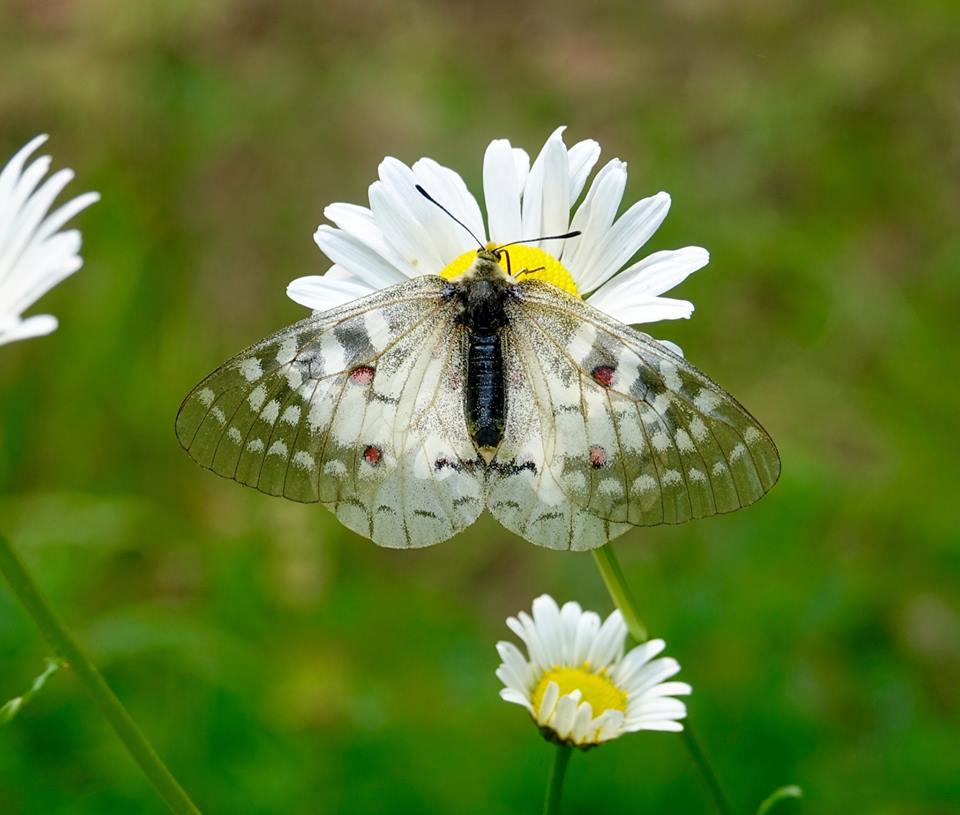
I first got interested in butterflies when we first climbed Sauk Mountain two weeks ago. We were hiking and we took a break, and behind us we saw these people with butterfly nets. I am naturally interested in anything to do with insects, and when I saw the butterfly nets, I couldn't stop wondering about it. We waited for a few minutes before they caught up to us, and it turned out they were volunteers for the National Park's Cascade Butterfly Project. I observed them for the rest of the time, and the observer, Adriana, gave us her phone number to contact her. She let me borrow her net, and I caught my first butterfly, a Clodius Parnassian, (Parnassius Clodius), pictured below, that same day.


A week later, we got off to a bit of a late start to Sauk Mountain again, but it turned out Adriana and her family had as well. I soon caught up to them and we immediately started counting butterflies.  The first butterfly we caught was an Anna's Blue, one of the most common butterflies in the cascades. In total we caught 56 Anna's Blues. We caught more blue's, such as one rare arctic blue, a Boisduval's blue, and observed 8 unidentified blues. The total amount of blues we caught was 68.  We caught a few copper's, such as 2 Mariposa coppers, 13 purplish coppers, and 8 unidentified coppers. The coppers are relatively small, about the size of a nickel. The total amount of coppers we caught were 23. We took a  quick break, and then continued counting butterflies.


There were lots of fritillaries, the little orange ones with the silvery spots on the ventral, (outside) part of their wings.  We saw 47 unidentified Fritillaries, 4 Hydaspe Frits, and 17 Mormon Fritillaries, the one pictured above. We saw only a few parnassians, 4 unidentified and 3 Clodius Parnassians.  We had also seen 14 unidentified butterflies. In total, we counted 178 individual living butterflies! We hope to see more butterflies again soon when we leave Saudi, but for now, Please stay tuned for more information on my website, www.birdsandturtles.com, for more  info about my adventures.

Sunday, January 10, 2021

January 2nd - Seven Island Bird Sanctuary The drive to Seven Island Bird Sanctuary was about 45 minutes, and on the way, we saw a falcon of some kind, possibly a Peregrine Falcon or a Merlin. As we were driving down the road in the park to the parking lot, my mom said that a good place to see birds was down by the boat launch, and that not many other birders use it. As we pulled up to the boat launch, the first thing we heard were two Carolina Wrens calling each other. As we got out of the car, I saw one of the Carolina Wrens and a Northern Mockingbird. As we started down the trail, we heard and saw hundreds of birds flying across the trail. We saw two Pileated Woodpecker houses on two trees. Then, we heard a Pileated Woodpecker calling and then we saw it climbing up a tree! I am always excited to see Pileated Woodpeckers, but in 2020 was amazing! The only other time I can remember when we saw a Pileated Woodpecker was in Florida. I couldn’t get a picture because he was too hidden in the branches. We saw three or four Eastern Towhees hopping in the branches. The trail was filthy with Cardinals and Robins. We spotted two groups of five or six deer hopping around to go down to the river to get a drink. We heard what we thought was a Carolina Chickadee, but when we got to another trail, we realized it was a White Throated Sparrow. We also spotted some American Goldfinches. After we finished the boat launch trail, we headed back to the car and had a snack. As we were eating, we saw a Northern Mockingbird on a fence post near us, eyeing our kettle corn. He must have been fed by other people having a snack. After we finished, we walked down a road but there were people everywhere. We eventually found a small trail that nobody was walking on. We walked up a long hill, and at the top we found a bush with a northern mockingbird in it, posing for us. The scenery was small bushes, and as we were walking we saw five or six White Tailed Deer hopping through the bushes. At the top, my sister and I ran down a long hill, and at the bottom there was a small pond. On the pond was a small boardwalk and viewing platform. The platform was made out of around 170,000 recycled plastic jugs. We saw one female and two male Northern Cardinals in a bush. As soon as they were startled, a Marsh Wren flew in and took their spot. We also saw three White Throated Sparrows hopping around.

The Northern Mockingbird eyeing or kettle corn.

A Cedar Waxwing by our house in Sevierville

A Golden Crowned Kinglet at the boat launch trail.


  January 3-6 Ellijay Georgia Property We arrived the evening of the third at our next airbnb in the mountains of North Georgia. The first thing we noticed was all of the land that was part of the property. The house was huge. After we explored the house, we went on a walk around the property. The next morning, after my mom got the groceries, we went walking again and this time, there were cattle out on the farm across the stream! My sister and I found some grass for them, but they weren’t interested in us. When we came back, I noticed that there were at least ten Eastern Bluebirds in the bushes! We had basically won the “Bluebird Lottery.” I also spotted some Northern Cardinals and an Eastern Phoebe on the hot tub cover! We also saw twelve Turkey Vultures circling above our house. We constantly heard Carolina Wrens in our yard, and also heard a White Throated Sparrow responding to my calls.

A bright Eastern Bluebird escaping us.

Notice the bold bright blue on this Eastern Bluebird.

This guy was ten feet from me on the deck!


Bombay Hook, Deleware

Bombay Hook is only 10-15 minutes away from the house we are staying in, so we were happy about that. As we pulled into the parking lot, the first thing we noticed was we had to pay a fee, but we didn’t know that we had to put the money in an envelope. We had put twenty dollars straight into the box, and then we realized that we had to put it into an envelope provided first, so we put another twenty dollars in. After we left the parking lot, we drove down a gravel road, and after a thousand or so feet, we drove around a corner and passed a small man-made “pool” called Raymond Pool, and then we drove past another man-made “pool” called Shearness Pool. We saw literally thousands of Snow Geese, and every time we looked up we saw lots of V’s, with hundreds of Snow Geese in each V. This morning, before we went birding, we went jogging down to Shearness Pool and back. It was 27o, and it actually felt good on my burning cheeks. Later tonight, as we were driving to Fowler Beach to see owls, we saw lots of what looked like snow, but then we realized that it was thousands of Snow Geese on the grass, hunkering down for the night. Every time we looked up, there were lots of V’s. We saw 3 or 4 Northern Harriers flying around, we might have seen one owl flying, but we aren’t sure. Besides the thousands of Snow Geese, we were also able to add several new species to our E-bird life list, including the Carolina Chickadee, Golden Crowned Kinglet, Snow Goose, Green Winged Teal, Northern Mockingbird, Northern Harrier, Turkey Vulture and more.
This Snow Goose was trying to catch up with the rest of the flock.


Notice the bright blue secondary feathers on this Blue Jay.
This Eastern Bluebird was eating from the Holly Bush.
The Eastern Bluebird was startled by something.

Tuesday, December 29, 2020

Cape Cod December 2020


Dec 12 - Dec 14

After we drove onto Cape Cod the day we arrived in Massachusetts, We drove through Wareham. We saw a few Canada Geese swimming in the pond.  We got a Christmas tree as soon as we woke up on Saturday morning, the  day after we arrived in Massachusetts.

The first Canada Geese we saw in Warehem this year.


After we picked up the Christmas tree, we drove to Santuit Pond, and it was frozen over. A few hours later, we went to Ryder Conservation Land entrance one, as we call it. It was a deciduous  forest, with lots of holy trees mixed in. Most of the Robins we saw were eating the Holly berries. The next day, we went to another spot on the Ryder Conservation Land.  It was a deciduous  forest, with lots of holy trees mixed in, just like the other spot because it was the same general area.

Yesterday morning, we went jogging on the meadow path behind the Cape Cod Airfield. There were Sumac branches, with lots of little nibblers darting about. We possibly saw some  Cedar Waxwings.  It was a deciduous  forest, with lots of holy trees mixed in. 


Dec 15 -17

The bog we live on is a cranberry bog, and there are these isthmuses that enable us to cross the bog without having to walk all the way around. In the fall, the bog is flooded so the farmers can harvest the berries. In the winter, it is blood red. In between the bogs,there are clumps of trees. Attached below is a picture of one of the bogs. It was right around freezing for a few days, but then the temperature suddenly  plummeted and it snowed. It was a lot colder, and I could barely walk it was so cold. What made it worse was that the wind was blowing at least forty miles per hour. Even though it was so cold, we still saw a few birds out and about, such as fifteen Blue Jays puffed up and hunkered down in a clump of trees. Another species we saw was more than 200 Turdus migratorius flying across the bog. We saw about twenty mallards and a Great Blue Heron in a little pond on the side of one of the bogs. A few minutes later, we spotted about fifteen other mallards and an American Wigeon in a small canal about 10 feet wide near an isthmus. There are other canals that link the bogs together. The american Wigeon was mixed in with the mallards. We were surprised, and at first we thought it was a hybrid mallard, or an immature mallard. Then we spotted it’s white bill and racing stripe over the top of his crown and knew it was a Wigeon. 


The American Wigeon is the duck in the front.

My mom and my sister playing in the winter wonderland bog.


December 19 - 20

  Yesterday, Saturday the 19th, we drove to a familiar place, Turtle Back Drive, the road next to our house, not the rental house we are staying in for two weeks. We walked down the road a little more, and then it turned into a gravel road. Partway through the gravel road, we turned down a gravel hill and at the bottom, we entered the bog path that our house sits on. The bog was snowy, so it was harder to walk. We saw mostly Turdus Migratorious, but we noticed a flicker and a Downy Woodpecker as well. On the bog, we saw a Red Shouldered Hawk flying back and forth across bog road. After we walked around the bog, we headed down to the lake where we parked. At the lake, we spotted  4 Common Mergansers, 5 Mallards, approximately 30 Canada Geese flying overhead, and we saw about 12 Gulls flying around.


The Red Shouldered Hawk flying around the bog.


Later in the day, we went back to the lake, and near the herring run, we saw an Eastern Phoebe flying around.


This morning at Ashumet Holly Wildlife Sanctuary in Falmouth, the first thing we saw was a sign on the entrance gate it read: In order to protect wildlife, please, no vehicles, bicycles,dogs, horses, hunting, collecting, dumping, alcohol or fires. I was kind of disappointed because I like collecting things like Holly leaves. As we walked on, we saw some frozen ponds. Not long after we entered the sanctuary, we saw some nibblers flitting about, and when one stopped for a minute, we were able to tell that it was a thrush. When we got back home, we looked him up and realized it was a Hermit Thrush, a new life list species for us on e-bird. There were five. We saw a frozen lake, but the ice was pretty thin. As we entered the parking lot on our way back, we saw two male and female Northern Cardinals, as shown below. After we got back, we saw a Cardinal and a Bluejay in our yard.


A BRIGHT RED Northern Cardinal in our yard.

Notice the stunning blue feathers on this Blue Jay.


The male Cardinal we saw flying after the female.


Dec 21 - 24

The Elusive Blue Jay.

Today, we visited Long Pasture, dubbed Hermy Beach by us because of all the hermit crabs. When we normally go, we go in the summer. The first habitat we were in was mixed wetlands, which then turned into a mixed forest, which winded down to the beach. We saw 5 American Goldfinches at a feeder by the welcome center, along with a few Northern Cardinals and around 7 House Finches. There was also an elusive Blue Jay in the branches of a few trees.   We have been going on bog outings since we have levied in Massachusetts, and this winter we also went on a few bog outings. We have been riding our bikes around the bog since we moved to Massachusetts , and today was the first time I rode my mom’s bike around the bog. We saw two Mute Swans on a pond in the bog, and about fourteen Buffel Heads in the pond as well. The Mute Swans were probably the Mute Swans we first saw when we moved to Massachusetts in 2013.                                                               

A Goldfinch in a tree, about to fly down to the feeder.


The Red Tailed Hawk flying up to a tree.


December 27 

This morning, I woke up, ate a quick breakfast of cereal, and then went jogging with my dad at Ryder Conservation Land Entrance Two, as I call it.  We went jogging on a side trail that paralleled the main trail, and my mom and my sister walked on the main trail. As we were walking back to the car, we most likely heard an Eastern Phoebe calling. Then we saw it fly across the path, and that is when we thought it was a Phoebe. This was also the end of the Cape Cod Edition. Stay tuned for a future blog post from our drive to Deleware, then further down the East Coast to Florida.  And as always, visit birds and turtles to see more pictures.

A Christmas Eve Cardinal!